Most organisations focus on strategy and execution.
The biggest opportunity to maximise value sits between them.
Most senior leaders already know the symptoms. Important initiatives slip. Key people are spread too thin. Teams stay busy, but throughput does not improve.
The reason is rarely found inside one project, one team, or one plan. In shared-resource environments, performance is shaped by how work flows through the system.
Flow Economics helps leaders understand that missing layer - how demand, sequencing, and intervention decisions affect flow, output, and value across the portfolio.
Get the free guide + first two course modulesIf these patterns sound familiar, you are in the right place.

Your most important initiatives keep slipping

Key specialists are spread across too many priorities

Priorities keep changing, but outcomes do not improve

Teams are working harder, but throughput stays flat

New work keeps starting, but too little actually finishes
Why It Happens
Projects do not operate in isolation. They share people.
When multiple initiatives compete for the same constrained resources, the system starts to behave in ways that no individual project plan can explain or predict. Queues form. Specialists context-switch. Progress slows. And the more projects you add to the mix, the worse it gets - even when every single one of them is genuinely important.
The Overload Paradox: starting more work can result in delivering less value.
Understanding that dynamic is the first step towards managing it.
What Flow Economics Is
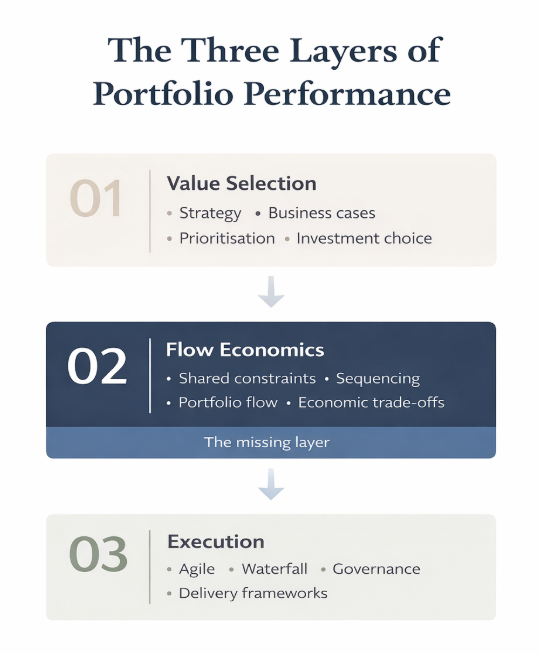
Flow Economics sits in the layer between strategy and execution.
Most organisations invest heavily in choosing the right initiatives and delivering them well. Both matter. But in shared-resource environments, value is often won or lost in the decisions between them - how work is sequenced, how constraints are managed, and where intervention creates the greatest return.
That is the question Flow Economics answers.
It is not another project methodology. It is not a delivery framework. It is an economic lens on how value flows - or fails to flow - through the systems organisations actually run.
How do you maximise the value your organisation actually realises when resources are shared, priorities compete, and the portfolio never stops moving?
That is the problem Flow Economics is designed to solve.
What You Get
Two practical resources. One email address. Both free.
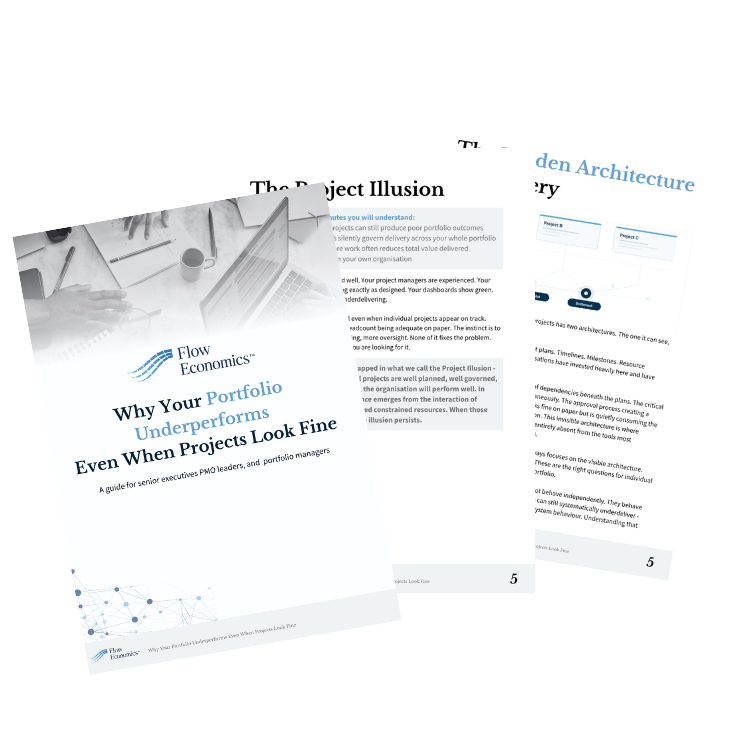
The Flow Economics Guide
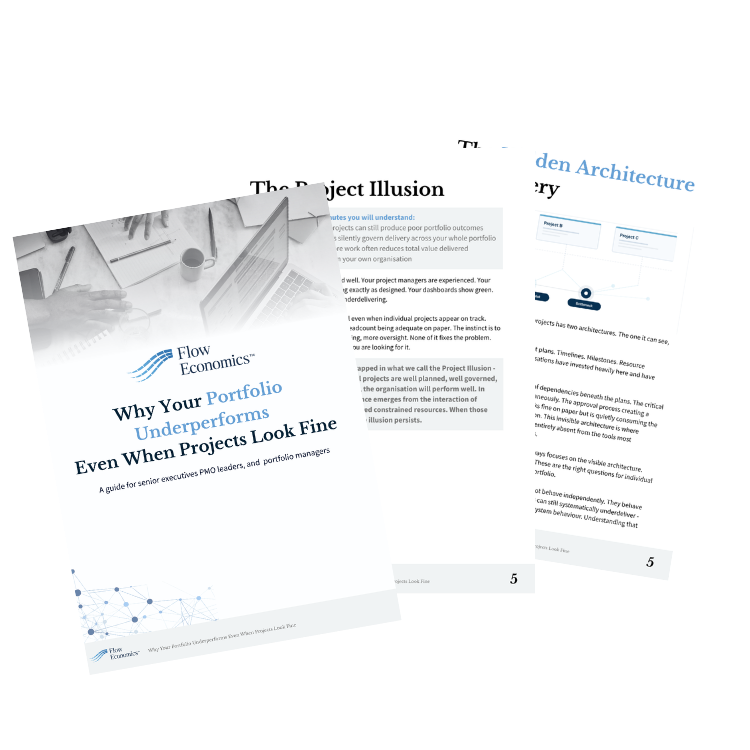
A concise introduction to the core ideas behind Flow Economics, including the Project Illusion, the Overload Paradox, the three-layer model, and a short self-assessment to help you understand where your organisation stands.
Delivered straight to your inbox as soon as you sign up.
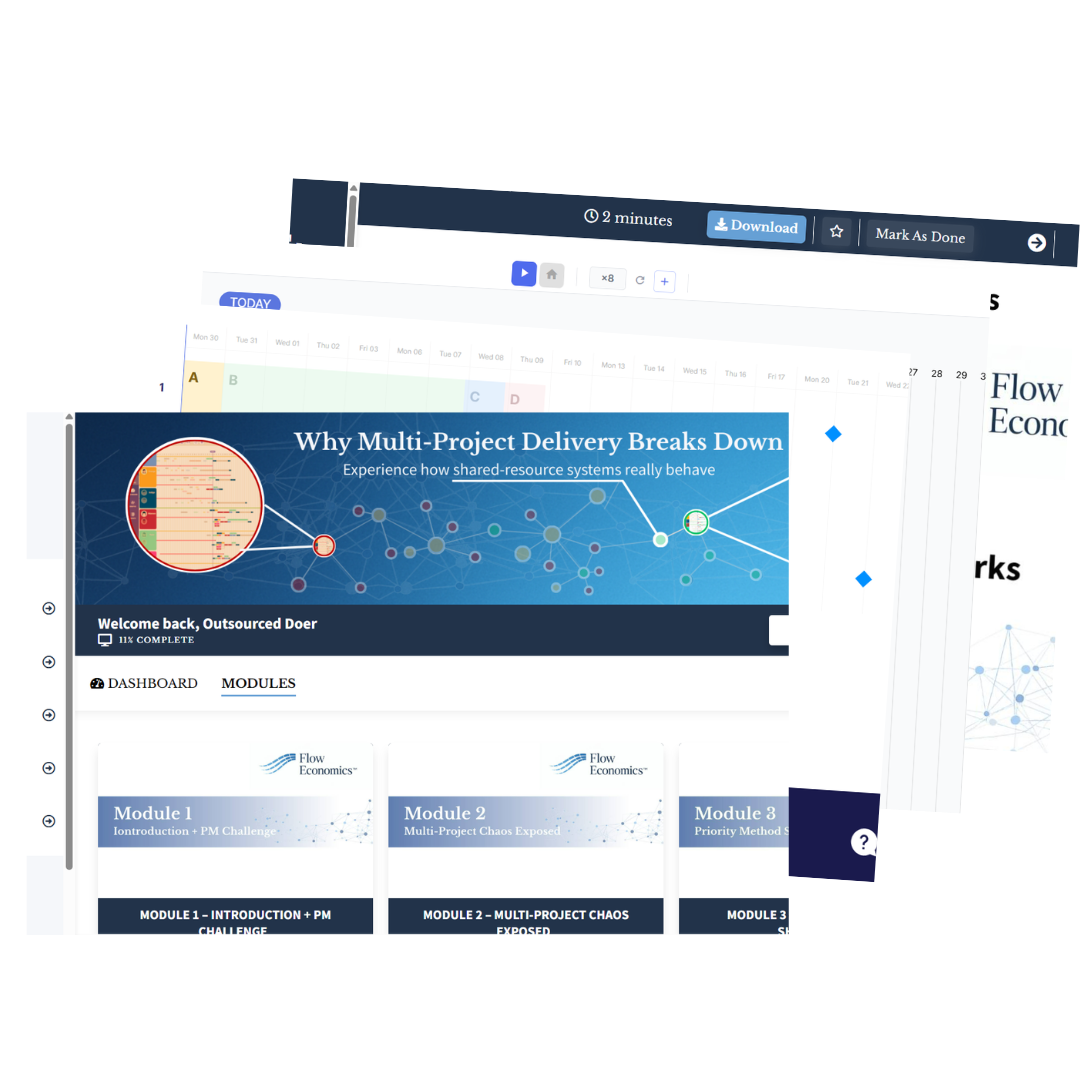
The Flow Economics Course
A practical introduction to how shared-resource systems really behave. Using the simulator, you will see how priorities interact, how overload emerges, and why better sequencing and intervention decisions matter.
Access is immediate, and no payment details are required.
Ready to understand the missing layer between strategy and execution?
Get the guide and the first two course modules free.
No payment details. No commitment. Just a clearer way to understand how value moves - or gets stuck - in complex shared-resource environments.
Get instant access - freeEnter your email to get started